About Biometric System
A Biometric Attendance System is an automated system that records employee or student attendance by using unique biological characteristics such as fingerprints, facial features, iris patterns, or palm prints for identification.
Description
A biometric attendance system captures a person's biometric data during registration and stores it securely in a database. When the person reports for attendance, the system scans the biometric trait, compares it with the stored template, and verifies the identity. Once verified, the attendance is automatically recorded with the date and time.
Main Components
-
Biometric Scanner Captures fingerprints, facial images, iris patterns, etc.
-
Database Stores biometric templates and attendance records.
-
Processing Software Matches scanned data with stored records.
-
Attendance Management Module Generates attendance reports and tracks working hours.
Working Process
-
User enrolls by providing biometric data.
-
The system creates and stores a biometric template.
-
During attendance marking, the user scans their biometric trait.
-
The system verifies the identity.
-
Attendance is recorded automatically.
Advantages
-
Prevents proxy attendance ("buddy punching").
-
Improves accuracy and reliability.
-
Saves time compared to manual attendance.
-
Reduces paperwork and administrative effort.
-
Provides real-time attendance tracking and reporting.
Applications
Sample Short Definition
A biometric attendance system is an electronic attendance management solution that uses unique biological characteristics, such as fingerprints or facial recognition, to accurately identify individuals and automatically record their attendance.
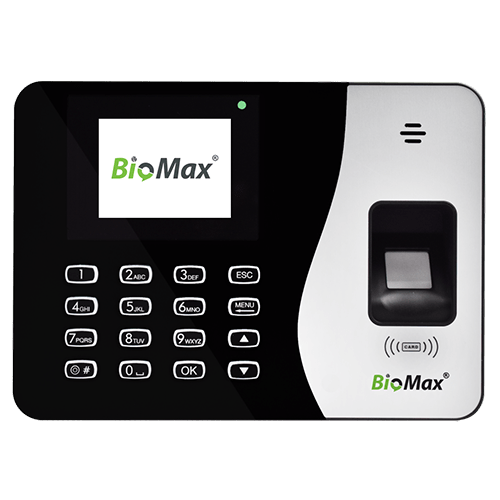
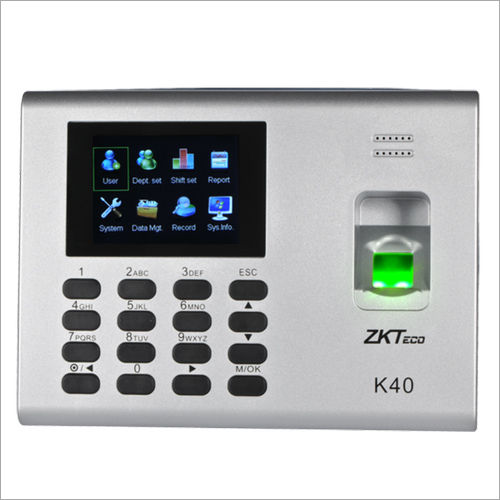
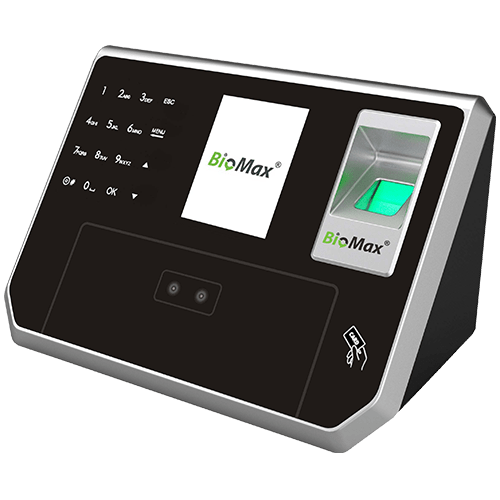
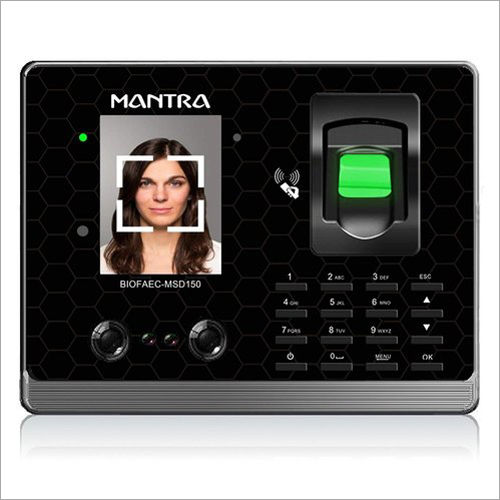
Enhanced Security and ConvenienceThe biometric system employs a 500 DPI fingerprint sensor with high accuracy rates (FAR: 0.001%, FRR: 0.01%) for secure and swift authentication. Featuring multi-modal identification-fingerprint, RFID, and password-users gain flexible access suited to various operational requirements. Its real-time attendance tracking and anti-passback feature bolster security and prevent unauthorized re-entry, ideal for active workforce environments.
Robust Design and Flexible InstallationBuilt with an ABS plastic body and anti-static protection (up to 15KV), the system is engineered for durability and reliable operation. It supports both wall and desktop installation, catering to diverse application spaces. With a size of 190 mm x 140 mm x 45 mm and a weight of just 800 grams, it is both compact and easy to install, suitable for offices, factories, and institutional settings.
User-Friendly Interface and ConnectivityEquipped with an intuitive LCD display, voice prompts, and a buzzer, navigation is simple and accessible. The Linux-based embedded OS supports convenient management and updates via USB or network. Connectivity via TCP/IP, USB, RS232, and RS485 ensures easy integration with existing infrastructure and seamless data management.
FAQ's of Biometric System:
Q: How does the biometric system ensure accurate identification?
A: The system uses a 500 DPI fingerprint sensor combined with advanced algorithms to offer fast, accurate identification. It achieves a remarkable false acceptance rate (FAR) of 0.001% and false rejection rate (FRR) of 0.01%, ensuring dependable user authentication with each scan.
Q: What is the process for enrolling users and updating templates?
A: Enrolling new users involves registering their fingerprints, RFID cards, or passwords directly through the LCD interface. Template storage supports up to 1,000 users. Updates or firmware upgrades can be performed via USB or through the network interface for seamless maintenance.
Q: When is it beneficial to use the backup battery option?
A: The optional backup battery provides up to four hours of operation during power outages. This is beneficial in environments where consistent access control is vital, such as hospitals, factories, or offices, maintaining security during electrical disruptions.
Q: Where can this biometric system be installed?
A: The device supports flexible installation options. It can be wall-mounted near entry points or placed on desktops at reception areas, making it suitable for use in offices, factories, schools, hospitals, and other locations requiring secure and reliable access control.
Q: What are the key benefits of using multi-language support?
A: Multi-language support (English included by default) makes the system accessible to a diverse workforce, minimizing training time and reducing errors from language barriers. This functionality is crucial in multicultural and international organizational environments.
Q: How does real-time attendance tracking benefit organizations?
A: Real-time attendance features enable organizations to monitor employee presence instantly, reducing time fraud and streamlining payroll processing. Automated reporting ensures accurate record-keeping for compliance and administrative efficiency.
Q: What usage scenarios best fit this biometric system?
A: The system is ideal for environments requiring precise attendance records and secure access, such as corporate offices, manufacturing plants, educational institutions, hospitals, and any secure entry points where reliability, data capacity, and quick authentication are priorities.

 Send Inquiry



 Send Inquiry

 Send Inquiry
